Selecting materials for commercial hospitality dining
Hospitality dinnerware encounters extreme handling conditions compared to domestic tableware. In commercial kitchens, plates withstand repeated conveyor dishwashing, thermal shock from salamanders and plate warmers, and mechanical impact from cutlery. Selecting the proper body formulation is essential to balance weight, aesthetic presentation, and replacement rates.
Hard porcelain fired at temperatures exceeding 1300 degrees Celsius provides the lowest water absorption and highest edge strength, making it the preferred standard for high volume banqueting and fine dining. Soda lime glass offers clarity for beverage service, while tempered glassware provides enhanced shock resistance for busy cocktail lounges.
Tableware material comparison
| Material | Water absorption | Thermal resistance | Primary hospitality application |
|---|---|---|---|
| Hard porcelain | Below 0.2 percent | High (up to 200°C shock) | All day dining, fine dining, banqueting |
| Reinforced stoneware | Below 1.5 percent | Moderate | Rustic concepts, boutique bistros |
| Tempered soda lime glass | Zero | High physical shock | Bistro water tumblers, beer glasses |
| Lead free crystal glass | Zero | Moderate | Wine service stemware, signature cocktails |
| 18/10 stainless steel | Zero | Immune to thermal shock | Heavy duty cutlery place settings |

Commercial stemware and bar glassware inspected prior to packaging.
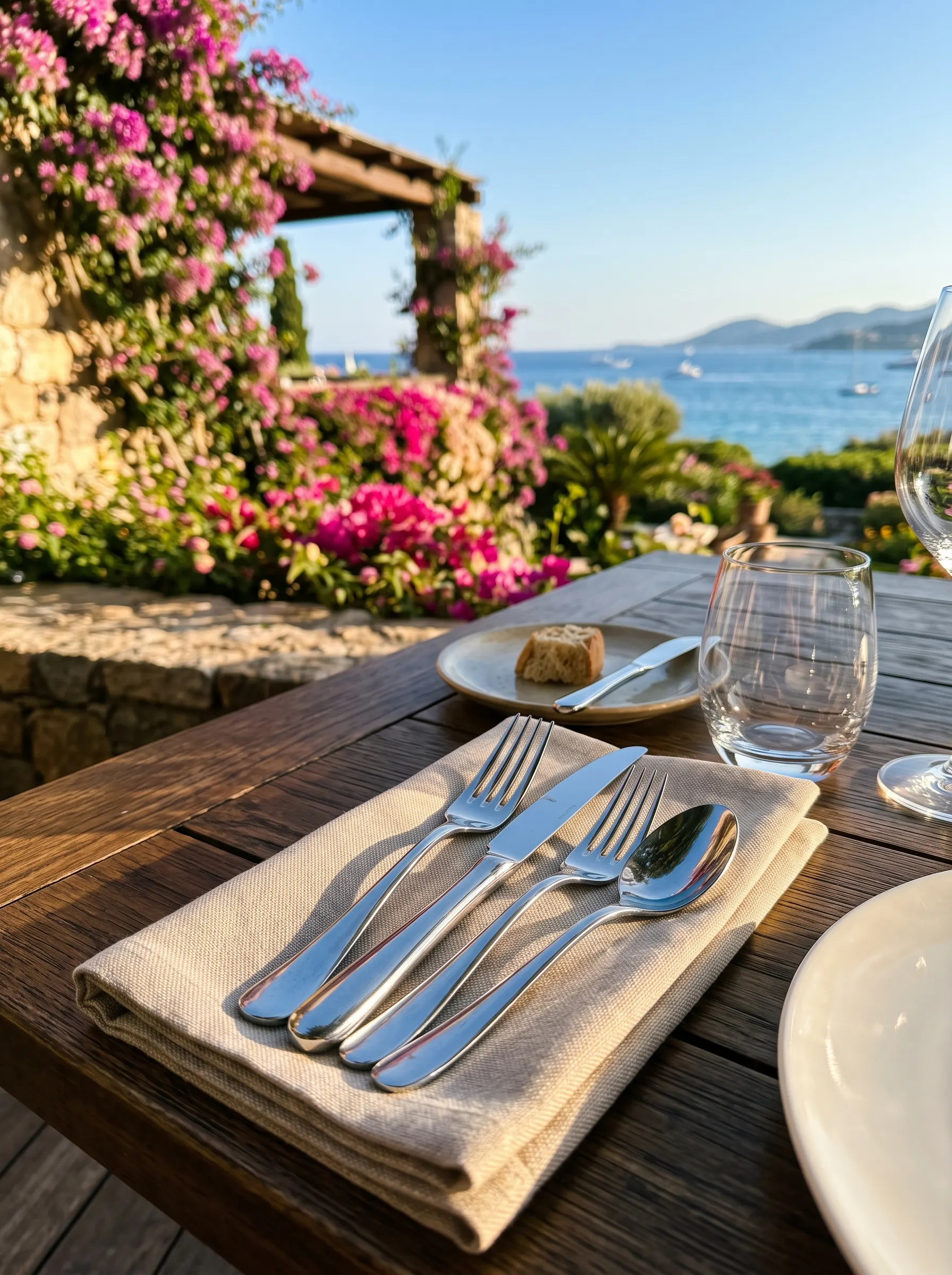
Forged 18/10 stainless steel cutlery sets with mirror polished finish.
EU food contact regulations and ceramic anti dumping duties
European law requires that all tableware placed on the EU market complies with Framework Regulation (EC) 1935/2004. Articles must not transfer components into food in quantities that endanger human health or bring about an unacceptable change in food composition. For ceramic products, testing measures the release of lead and cadmium under established acidic leaching test methods. Importers must hold a valid Declaration of Compliance supported by accredited laboratory test reports.
In addition to food safety directives, ceramic tableware originating in China is subject to definitive European Union anti dumping duties. Established under Commission Implementing Regulation (EU) 2025/1981 and revised under Regulation (EU) 2026/274, duty percentages vary depending on the participating manufacturing company and the specific TARIC commodity code. Sourcing through experienced partners ensures TARIC classifications are verified prior to contract sign off, avoiding unexpected customs duty assessments upon European arrival.
Specification checklist for tableware procurement
- Define rim profile: rolled rim for chip resistance or cut rim for contemporary presentation.
- Confirm foot ring finishing: polished and ground foot rings prevent surface scratching when plates are stacked.
- Specify dishwasher test cycles: verify glaze resistance against harsh alkaline commercial detergents over 500 wash cycles.
- State decoration technique: in glaze or underglaze decoration protects color pigment from chemical wear and knife abrasion.
- Review carton packaging: drop tested master cartons with heavy cardboard cell partitions protect fragile shapes during maritime haulage.
Direct catalogue access
Inspect individual product options or request immediate factory pricing on our category detail pages: