Engineering outdoor furniture for extreme coastal exposure
Resort environments create aggressive degradation mechanisms for outdoor furniture. Sun loungers positioned along beachfronts endure abrasive silica sand, high ambient salt humidity, and intense summer sun. On pool solariums, splashed chlorinated water accelerates the oxidation of inferior hardware. Commercial outdoor specifications must mandate marine grade base materials.
Structural aluminum frames must be pre treated with chemical conversion coatings before receiving polyester architectural powder coatings tested to 1000 hours of continuous salt spray exposure under ISO 9227 standards. Internal hardware, hinge pins, and tension springs must be specified in AISI 316 marine stainless steel to prevent rust streaking on resort pavements.
Outdoor material performance matrix
| Material system | Corrosion & UV stability | Maintenance requirement | Primary resort zone |
|---|---|---|---|
| Architectural aluminum (powder coated) | Exceptional (tested to ISO 9227) | Low (freshwater rinse) | Poolside loungers, dining chairs |
| AISI 316 marine stainless steel | Maximum resistance to chlorides | Very low | Beachfront cabanas, umbrella fittings |
| UV stabilized synthetic wicker (PE) | High (minimum 3,000 UV hours) | Low (brush and wash) | Lounge terraces, outdoor sofas |
| Reticulated quick dry foam | Open cell, prevents internal mold | Drains in minutes after rainfall | Sun lounger and daybed cushions |
| Solution dyed acrylic textiles | Pigment infused core, UV Grade 7/8 | Stain and mildew resistant | Parasol canopies, cushion covers |
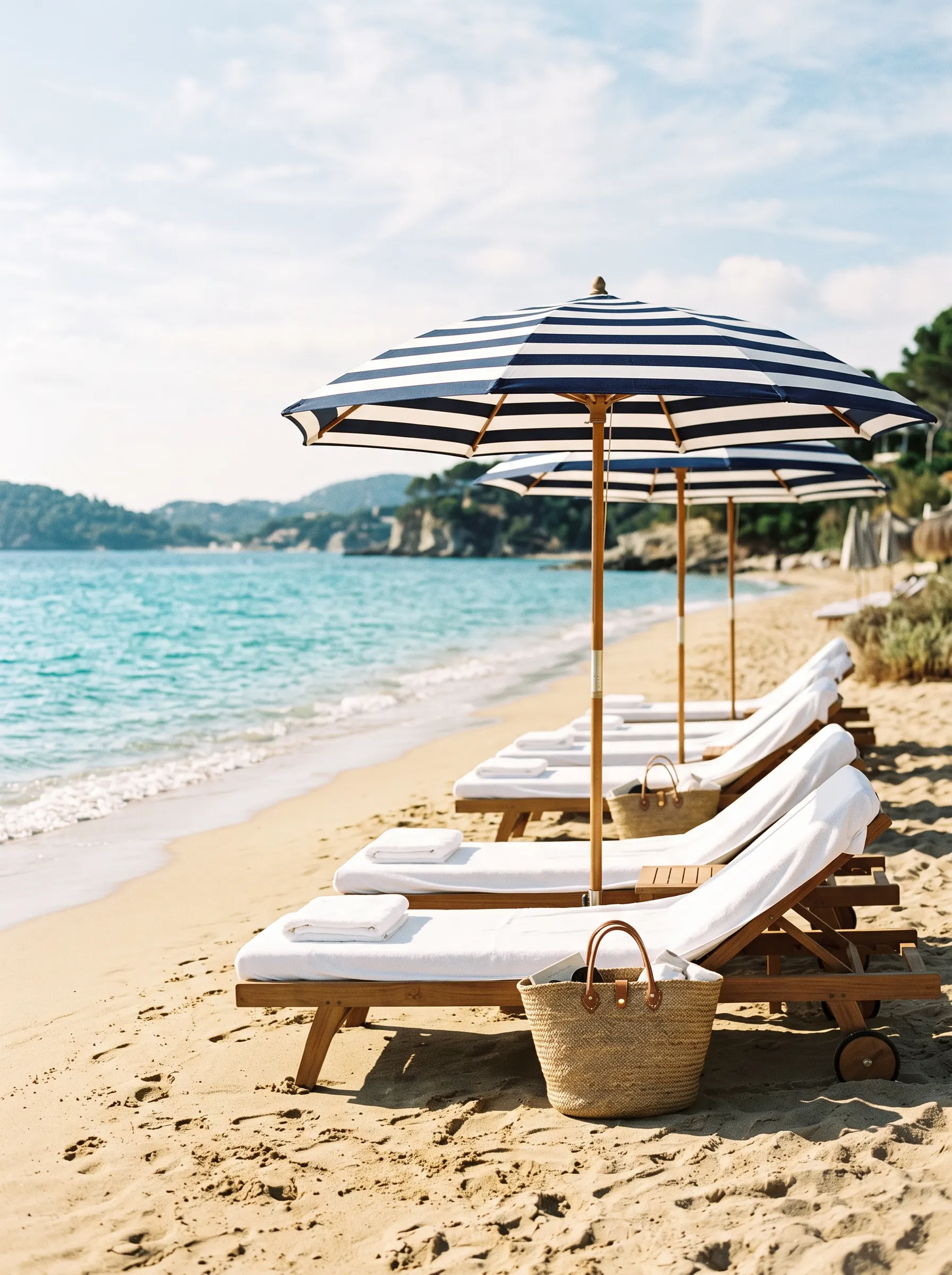
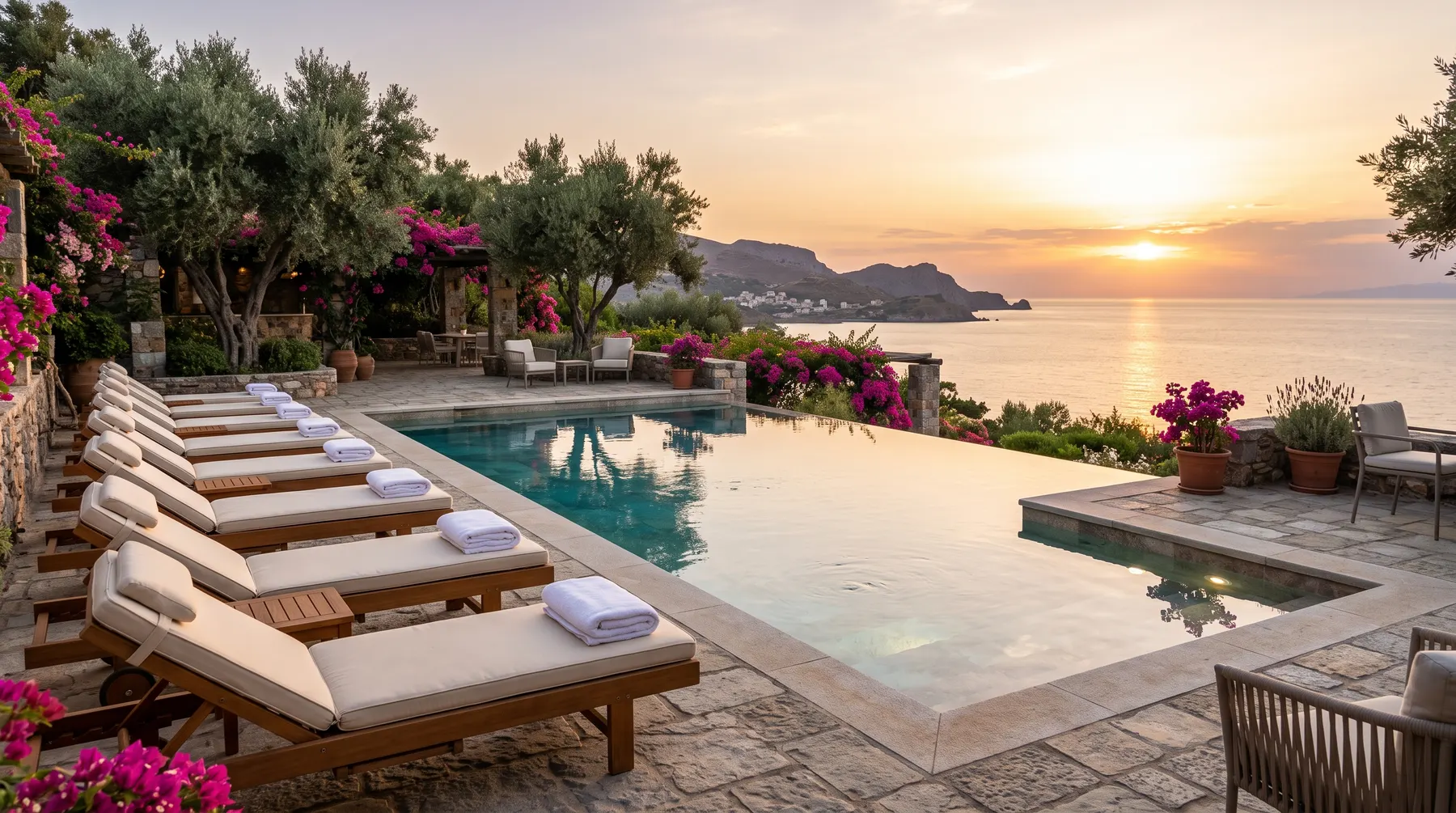
Commercial beach club loungers, cabanas, and shade structures.
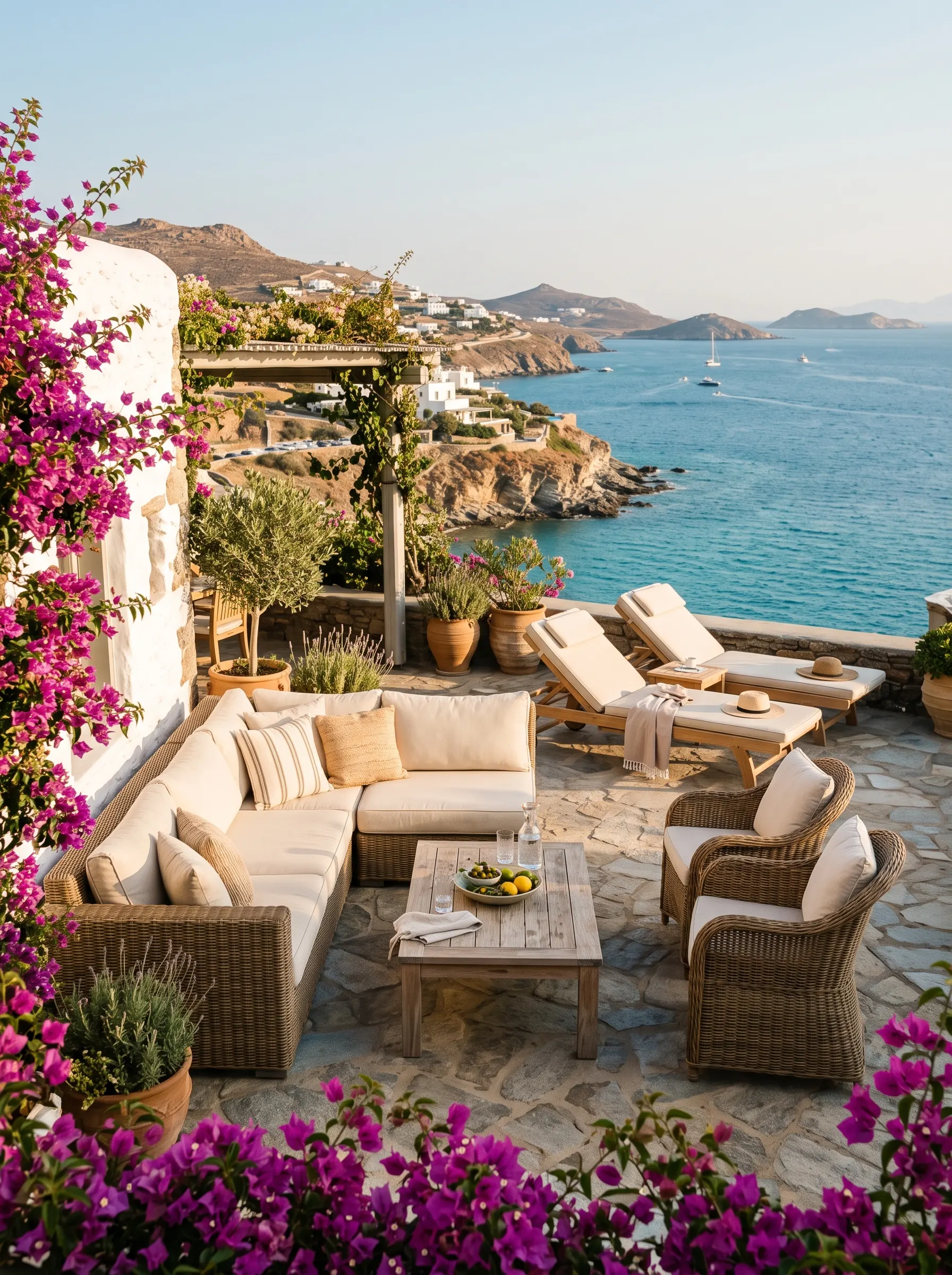
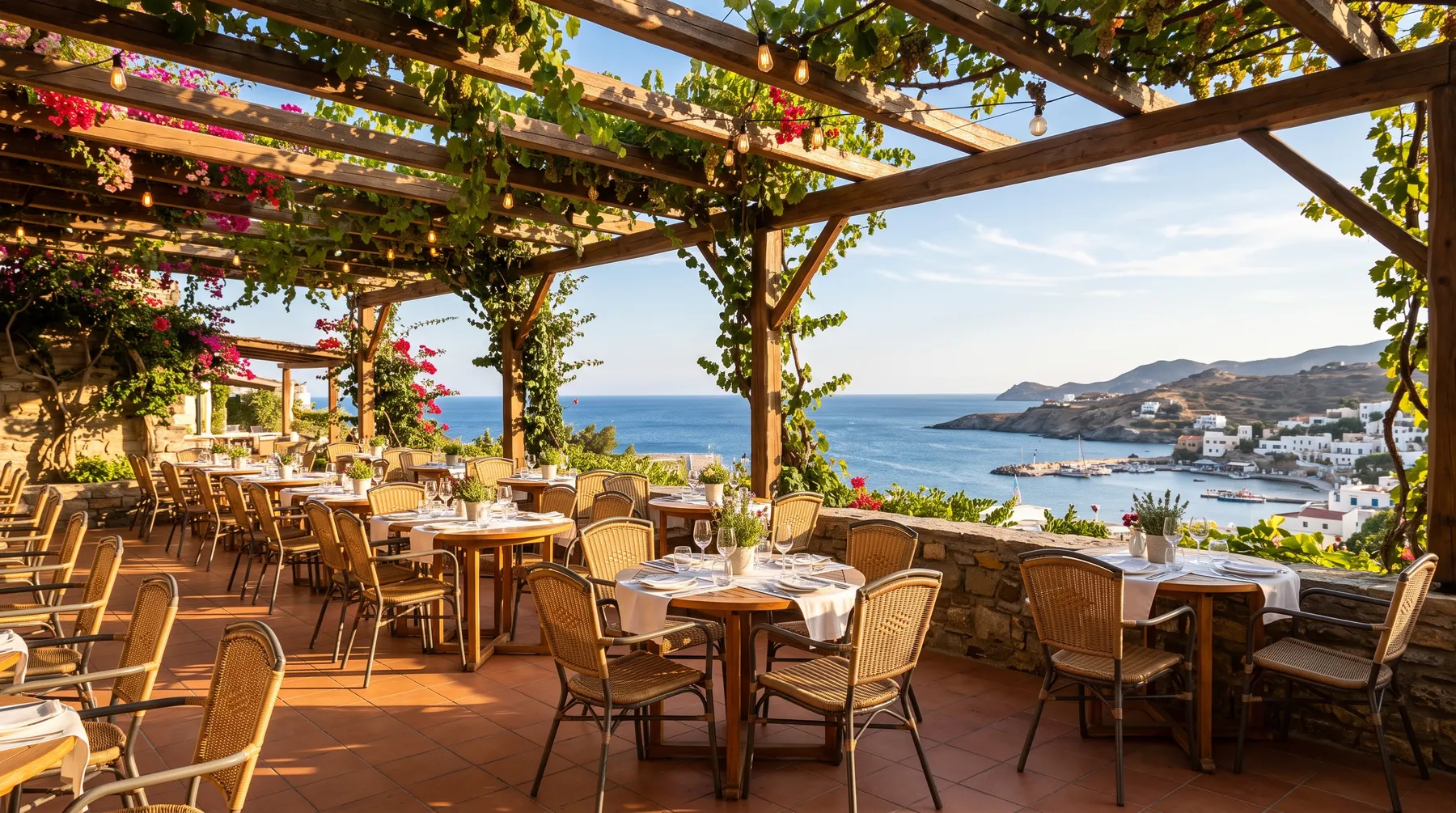
Synthetic rattan dining and lounge seating on resort terraces.
Commercial parasol specifications and wind load criteria
Shade structures represent significant liability in commercial hospitality if not properly rated for localized gusts. Commercial center pole and cantilever parasols must be engineered with heavy wall aluminum masts (minimum 3 to 4 millimeter wall thickness) and reinforced joint ribs capable of withstanding unexpected maritime wind shifts.
Canopy textiles must utilize 100 percent solution dyed acrylic or high performance olefin yarns. Unlike piece dyed fabrics that fade within one season, solution dyed yarns have color pigments embedded throughout the liquid polymer before extrusion, maintaining vibrant hue and structural tensile strength across multiple Mediterranean summers. Air vents at the apex relieve sudden under canopy pressure surges, while weighted granite or concrete base plates must be calculated based on canopy square footage.
Seasonal ordering schedules for European properties
Meeting resort opening dates requires backward planning from the operational calendar. Production queues for outdoor contract furniture peak between November and February. Maritime transit from Ningbo to European ports requires 35 to 53 days, followed by port customs clearance, container drayage, and uncrating on property. Orders confirmed in October or November reliably deliver in March or April, leaving ample buffer before Easter or high season guest arrivals.
Explore outdoor categories
Access technical specifications, product dimensions, and brief templates across our outdoor catalogue: