
Private ground utility versus public road approval
A critical legal distinction when procuring electric vehicles for European hospitality operations is the operating perimeter. The majority of resort vehicles operate strictly within the private boundaries of golf resorts, island properties, and gated holiday villages. These off highway vehicles fall under European machinery safety standards and require standard CE marking, low voltage compliance, and manufacturer declarations.
Conversely, if vehicles must cross or travel along public European municipal roads between resort annexes, they must achieve European Whole Vehicle Type Approval (EU WVTA) under Regulation (EU) 168/2013 for L category quadricycles (typically L6e light or L7e heavy quadricycles). This mandates specific automotive grade glass, three point inertia reel seatbelts, certified hydraulic braking systems, horn, indicators, and vehicle identification numbers recognized by national licensing bureaus.
Resort vehicle specifications and configurations
| Vehicle class | Seating & payload | Motor & battery system | Operating domain |
|---|---|---|---|
| Compact guest golf cart | 2 to 4 passengers / 350 kg | 4 kW AC motor / 48V LiFePO4 | Golf fairways, internal guest transfers |
| Multi passenger shuttle | 6 to 8 passengers / 650 kg | 5 kW or 7.5 kW AC / 72V Lithium | Arrival concourse, beach shuttles |
| Housekeeping utility cart | 2 seats + enclosed lock box | 4 kW AC motor / Heavy duty axle | Linen distribution, room turnaround |
| Maintenance flatbed truck | 2 seats + dropside bed / 800 kg | 7.5 kW motor / Hydraulic tipping | Groundskeeping, waste handling, luggage |

Modular resort service buildings with buggy charging staging points.
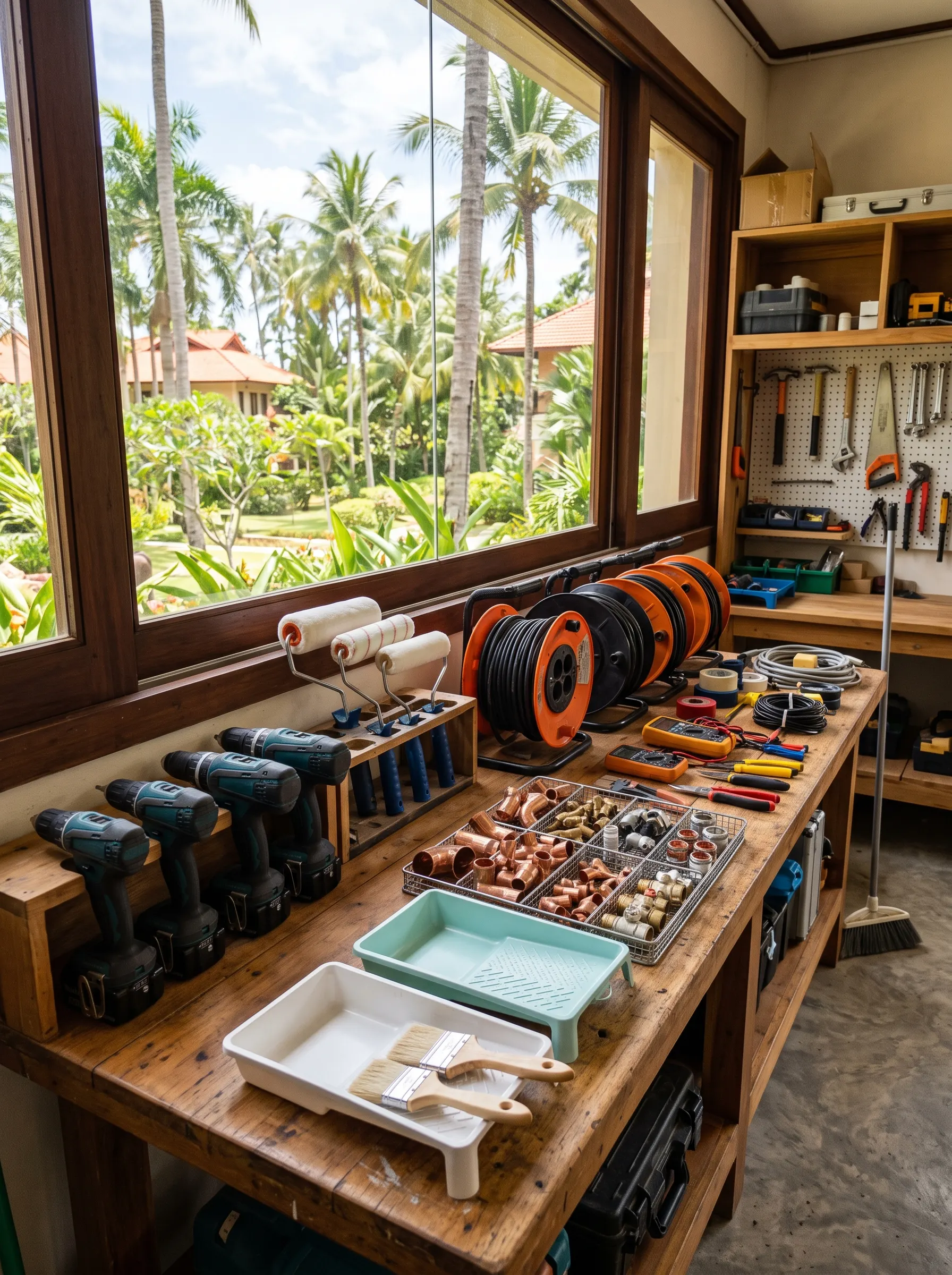
Engineering workshop tools and spare parts for fleet maintenance.
Battery chemistry, charging infrastructure, and maritime shipping
Modern commercial fleets predominantly adopt Lithium Iron Phosphate (LiFePO4) chemistry. Compared to older lead acid traction batteries, LiFePO4 cells eliminate liquid electrolyte maintenance, offer rapid opportunity charging between guest shifts, and reduce overall vehicle curb weight by up to 150 kilograms. This lower weight reduces turf compaction and improves gradient climbing ability on hilly resort terrain.
Shipping electric vehicles with installed lithium battery packs requires strict adherence to international maritime dangerous goods regulations. Under the IMDG Code, vehicles are booked under class UN 3171 (battery powered vehicle) or UN 3481. The manufacturing plant must supply a certified UN 38.3 test report demonstrating that cell modules have passed thermal, vibration, shock, overcharge, and external short circuit testing. Smart multi voltage onboard chargers with European standard plugs (Schuko or CEE form connectors) allow direct connection to standard hospitality electrical infrastructure.
Fleet maintenance and spare parts planning
To prevent resort guest transfer disruptions, procurement agreements should incorporate scheduled maintenance packages. Standard wear components such as brake shoes, hydraulic master cylinders, suspension bushings, and accelerator potentiometers are consolidated directly inside the vehicle shipping containers. English service manuals, electrical circuit schematics, and digital controller diagnostic handhelds are provided to support the resort engineering department.
Related resort systems
Explore complementary infrastructure and mobility solutions for hospitality properties: